You are here:
Auto-Feed Blind Rivet Machine Buying Guide: What Sheet Metal Plants Need
Auto-Feed Blind Rivet Machine Buying Guide: What Sheet Metal Plants Need
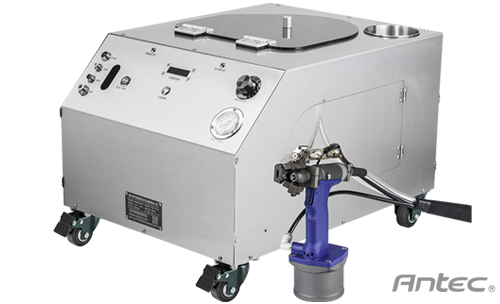
An auto-feed blind rivet machine (also called an auto-feed rivet machine or pneumatic rivet gun) sorts blind rivets in a vibratory bowl or magazine, feeds them automatically and sets each rivet in one cycle. Whether the machine fits the job decides line cycle time, yield and how fast the investment pays back. Antec has built riveting equipment for 16 years, has delivered 3,296+ automatic riveting solutions and serves 800+ enterprise customers. This guide breaks the process into six steps and closes with contract and acceptance checks, backed by a parameter table and a trial checklist you can use as-is.
For cabinets, chassis and enclosures, an auto-feed machine and a pneumatic gun usually handle the whole rivet range at 50-60 rivets per minute. Everything below applies to auto-feed blind rivet machine work in that shop-floor setting.
In short, for sheet metal and enclosure plants: start with the rivet and the workpiece, not the machine; match the machine format to the working conditions; four things to check in the core configuration; count the efficiency, then count the payback.
1. Start With the Rivet and the Workpiece, Not the Machine
A machine is built around the rivet and the workpiece, so choosing a model without the specs tells you nothing. Gather the following before you request a quote. The more complete the data, the more accurate the proposal and the price:
| Spec to confirm | Details required | What it drives |
|---|---|---|
| Rivet size | Cap diameter, body diameter, length, material (steel / aluminum / stainless / structural) | Determines the nosepiece, feed track and pull force |
| Workpiece | Material, material thickness, number of layers, hole count and spacing | Determines gun stroke, fixture and reach |
| Output target | Daily volume, cycle time per part, shift length | Determines a single-gun, dual-gun or robotic setup |
| Shop-floor conditions | Station footprint, air pressure and air volume, power supply | Determines where the main unit sits and how long the air hose runs are |
| Part mix | Number of rivet sizes, changeover frequency | Determines whether you need multiple feed tracks or quick-change nosepieces |
Commissioning on site is where the feed rate and the fixture get matched to the panel.
2. Match the Machine Format to the Working Conditions
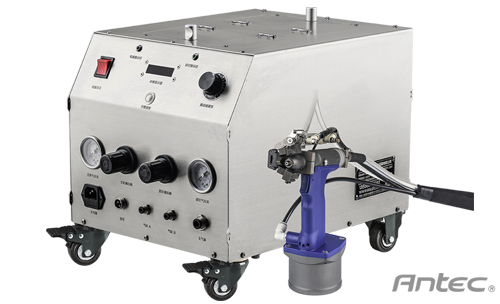
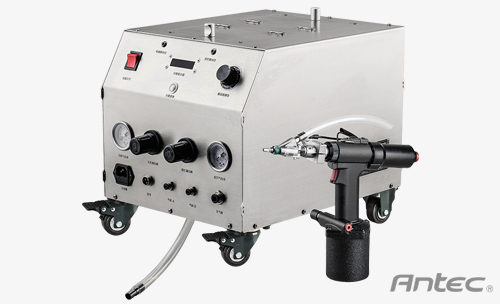
There is no one-size-fits-all auto-feed blind rivet machine. By degree of automation, four formats cover most work, and they suit very different jobs:
| Format | Best for | What you get |
|---|---|---|
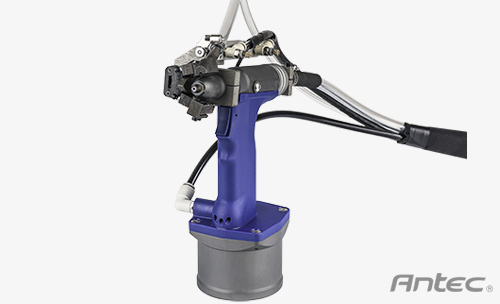
| Handheld pneumatic rivet gun | High-mix low-volume work, scattered hole positions, large sheet metal cabinets | Moves freely, low investment, quick to master |
| Bench or fixed-station model | Small parts, fixed station, dense hole patterns | Bench and fixture mounted for consistent results |
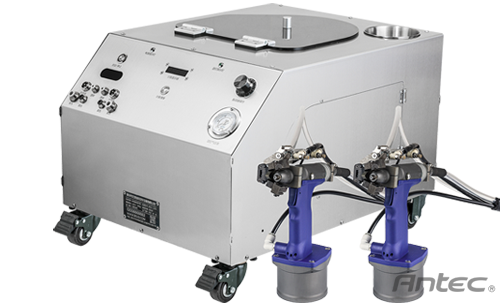
| Dual-gun model (one machine, two guns) | Standard enclosures, high-volume cabinet lines | Two stations run at once, close to double the output |
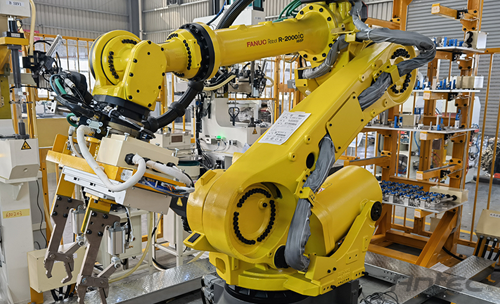
| Robotic riveting cell or full line | Battery trays and other parts with fixed hole positions and high volume | Fully automatic and unmanned, integrated station by station |
3. Four Things to Check in the Core Configuration
Feeding first. Three things decide whether a machine truly runs jam-free: how smoothly the vibratory bowl or magazine sorts rivets, whether the feed track is built around your rivet body diameter, and whether the machine detects missing and jammed rivets. Antec machines top up automatically and self-correct; the complete unit was tested on 30000 consecutive rivets without a jam, and the long-term failure rate is about 0.3%.
Pull force second. Common models deliver about 12800 N, enough for most enclosure, sheet metal and appliance rivets. Large cap diameters, stainless steel and thick stacks need more force and can be custom-built, so ask the supplier to state the margin against your actual rivet.
Components and gun body third. The machine uses brand-name electrical parts and imported pneumatic components. Machining accuracy on the gun body and the nosepiece directly affects thread stripping and missed rivets, and the nosepiece is a wear part, so confirm how many ship with the machine and what replacements cost.
Safety and ergonomics fourth. Mis-touch protection, rivet counting, fault alarms, gun weight and grip shape all affect how steadily an operator works through a long shift.
For cabinets and chassis, a trial on your own panels settles more than a specification sheet.
4. Count the Efficiency, Then Count the Payback
Auto-feed replaces manual rivet loading, and one machine sets about 50-60 rivets per minute, roughly the output of three rivet operators, for up to about 3x overall efficiency. At local fully loaded labor cost, a line with steady volume usually pays the machine back in 2-6 months. Less rework from missed rivets, stripped threads and scratched parts often saves more than the labor alone. For the full calculation, see automation gains in sheet metal and stainless steel fabrication.
5. Five Dimensions for Comparing Suppliers
| What to compare | What to confirm |
|---|---|
| Working range | Rivet sizes and material thickness the machine handles reliably, stated in writing |
| Measured cycle time | Proven on a sample run with your parts, not an absolute promise made without application data |
| Warranty and returns | 1-year machine warranty plus 7-day return and 15-day exchange for non-user damage, written into the contract |
| Spare parts supply | Unit price, stock and long-term supply commitment for nosepieces and other wear parts |
| On-site response | Response time for installation, commissioning, training and after-sales visits |
6. Trial First, Buy Second
Spec sheets and videos are no substitute for a real sample run. Antec can send an engineer to your plant with a matching machine to measure pull force, cycle time and yield on your own rivets and workpieces, and a standard on-site trial is free. Send your rivet specs and workpiece details and you can have a proposal and a price range in about 10 minutes. For what to prepare, see how the free on-site trial works and what to bring.
7. Contract Terms and Incoming Acceptance
Once the selection is confirmed, put these in the contract annex: the rivet size range the machine handles reliably, the acceptance criteria for cycle time and yield, single or dual gun and feeding configuration, how many wear parts ship with the machine, lead time and shipping method, installation and training arrangements, the conditions attached to the 1-year warranty and the 7-day return / 15-day exchange, and the unit price and supply commitment for wear parts.
Accept the machine in three steps. Unpack and check the main unit, gun, spare parts and documentation. Run it empty to verify feeding, counting and alarms. Then set a continuous batch of your real rivets and confirm cycle time, pull-out force and yield against the agreed figures. For customers worldwide, a factory engineer attends installation, commissioning and acceptance on site, and both sides keep a copy of the acceptance data.
Auto-Feed Blind Rivet Machine FAQ
Practical Q&A
Common rivet sizes are covered by standard models that ship from stock. Feed tracks, nosepieces, fixtures, and dual-gun or robotic setups are usually built around the rivet and the workpiece, so the package is a standard main unit plus non-standard tooling.
Similar sizes can be covered by changing the nosepiece and adjusting the feed track. When cap diameter, length or material differ widely, use multiple feed tracks or separate machines, and check changeover time during the trial run.
The gap comes from pull force, single or dual guns, feeding method, machine format and the amount of non-standard engineering. Low-price machines usually cut corners on the feeding mechanism and on components, so compare on the five dimensions above.
Antec supplies customers worldwide and can schedule an engineer to bring a matching machine to your plant for a sample run. Call +86 13556668682.
Consumables supply and after-sales response. A rivet machine runs for years, and the price and delivery speed of nosepieces, jaws and other consumables feed straight into long-term cost. Confirm both in writing before you sign.
Auto-Feed Blind Rivet Machine at a glance: 12,800 N pull force, 50-60 rivets per minute, in stock with fast dispatch, on-site commissioning and parts supply.
If the rivet size and sheet thickness are known, the team can name the model and the air requirements in one reply.
Standard factory work, mainstream pneumatic equipment
Tell us the rivet range and the output target. We will confirm the model, the 50-60 rivets per minute rating, the parts supply and the on-site commissioning.
Further reading: Selection Mistakes to Check Before Buying an Auto-Feed Blind Rivet Machine · Common Types of Auto-Feed Blind Rivet Machines · How to Choose an Auto-Feed Blind Rivet Machine Manufacturer · Auto-Feed Blind Rivet Machines
 Previous