You are here:
Auto-Feed Blind Rivet Machine Free Trial: Antec On-Site Testing Policy
Can You Try an Auto-Feed Blind Rivet Machine for Free? Antec On-Site Trial Policy and Process
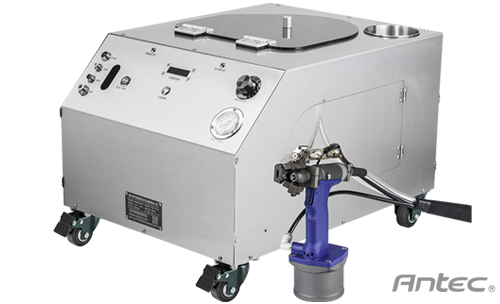
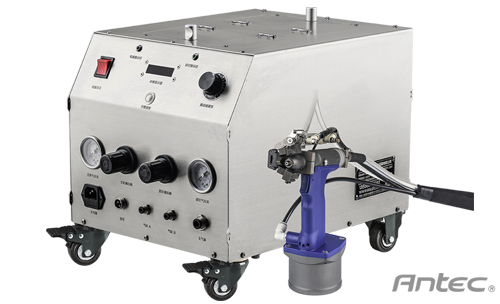
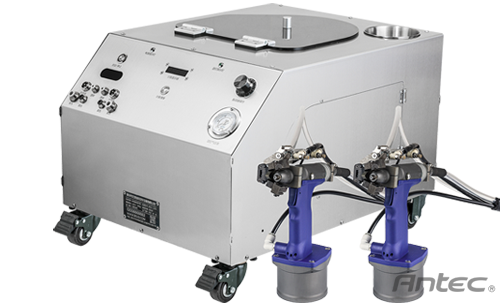
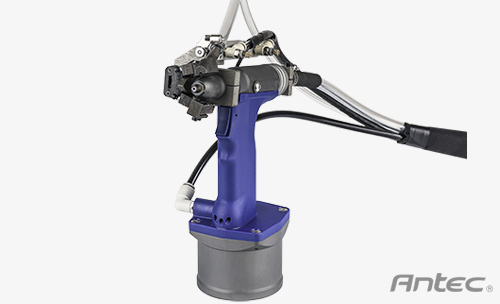
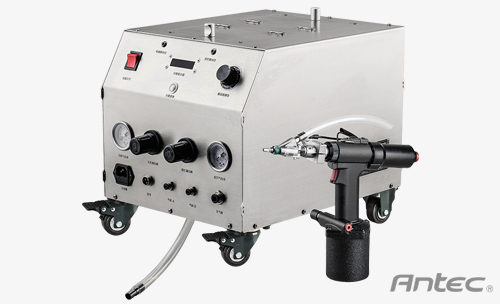
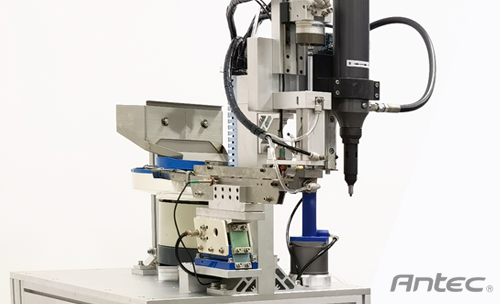
Yes, but Antec recommends an on-site trial rather than leaving a machine with you to test on your own. An auto-feed blind rivet machine is configured around a specific rivet, and the nosepiece, feed track and pull force all have to match it. Without an engineer setting the machine up on site, a self-service trial often measures the wrong thing, and bad parameters can lead to the wrong conclusion. The standard approach is therefore for an engineer to bring a matched machine to your plant and run your own rivets and parts on the spot.
Sheet metal plants care about cycle time and uptime, and the pneumatic line is built around both. Everything below applies to auto-feed blind rivet machine work in that shop-floor setting.
In short, for sheet metal and enclosure plants: on-site trial policy; the full process; what to prepare before the trial; if you are far away or cannot host a visit yet.
1. On-site trial policy
| Item | Details |
|---|---|
| Is there a charge? | Standard on-site trials are free; if a special custom plan involves costs, we say so up front |
| Service area | Manufacturing regions worldwide |
| Response time | We confirm within 1 business day of your request |
| What we test | Continuous rivet feeding, cycle time, pull force and riveting yield on site |
| Purchase obligation | None; the trial data is yours to use when you decide |
Commissioning on site is where the feed rate and the fixture get matched to the panel.
2. The full process
Step 1: Send the specifications. Give us the rivet head diameter, body diameter, length and material, a drawing or photo of the part, the material and thickness, daily output and cycle-time target. Send it by phone, web form or WeChat and Antec comes back with a plan and a price range in about 10 minutes.
Step 2: Shortlist the model. The engineer uses your specifications to select the main unit, gun type, nosepiece and feeding method, and confirms whether a standard or a custom solution applies.
Step 3: Book the visit. Once the date is agreed, the engineer arrives with the matched machine and test instruments.
Step 4: Run samples on site. We rivet continuously with your own rivets and parts and record cycle time per rivet, time per part, pull-out force and yield, then demonstrate changeover and daily operation.
Step 5: Issue the formal proposal. Measured data fixes the model, configuration, price, lead time and training schedule, and then you decide whether to buy.
3. What to prepare before the trial
Three things are enough: (1) rivet samples, with enough of each size; (2) the parts to be riveted, including typical parts in different thicknesses; (3) your current manual cycle time and daily output target. If you also have a workstation layout, air compressor specifications and the planned machine location, share them too, and the engineer will add fixture and line layout advice.
For cabinets and chassis, a trial on your own panels settles more than a specification sheet.
4. If you are far away or cannot host a visit yet
If hosting a visit is not practical right now, send rivet samples and typical parts to the factory first. Antec runs the samples in our workshop, records video and shares the measured data; you can also bring parts to the manufacturing base and watch the machines run in person. Once the plan is confirmed, delivery, installation, commissioning and operator training work the same way. See the detailed free on-site trial process and preparation checklist.
5. What a complete trial record contains
A proper on-site trial is more than setting a few rivets to see how they look. Ask the engineer to leave a documented data record:
| Record item | Contents |
|---|---|
| Trial conditions | Date, location, rivet specification, part name, machine model and configuration |
| Continuous feeding | Number of rivets set, jam or empty-feed counts, feeding success rate |
| Cycle-time data | Average time per rivet, time per part including pick-and-place handling |
| Quality data | Sampled pull-out force, thread stripping, missed rivets, scratches, yield |
| Recommendation | Recommended model, price range, expected payback period |
Antec records the on-site trial against this checklist and reports back to you, so you can compare suppliers side by side or use it as the basis for internal approval and purchasing sign-off.
How the trial connects to the purchase: once the record is confirmed, the engineer issues the formal proposal and quote. Standard machines can ship from stock; custom machines enter design and scheduling. The quote carries a validity date, so you can finish your internal approval and then sign. The trial itself is free, does not consume the quote validity and does not require a deposit.
On-Site Trial: Common Questions
Practical Q&A
For one rivet size at one station, 1-2 hours is usually enough for continuous sampling and data recording. Multiple sizes, multiple parts or a single-gun versus dual-gun comparison take longer, and we plan for that when you book.
Yes. Bring every size you use now and every size you plan to use, and we verify compatibility and changeover time on site so the configuration is settled in one visit.
Standard models ship quickly from stock; custom models are scheduled against design and assembly time, and the exact lead time is written into the contract. See how long it takes to build a custom auto-feed blind rivet machine.
Yes. If your plant has several products and rivet sizes, tell us when you book; the engineer will bring the right nosepieces, plan the time and validate workshop by workshop, with repeat visits if needed.
Auto-Feed Blind Rivet Machine at a glance: 12,800 N pull force, 50-60 rivets per minute, in stock with fast dispatch, on-site commissioning and parts supply.
Bring a sample panel to the trial - the engineer will set the feed and the nosepiece on the spot.
Standard factory work, mainstream pneumatic equipment
Tell us the rivet range and the output target. We will confirm the model, the 50-60 rivets per minute rating, the parts supply and the on-site commissioning.
Further reading: Antec company profile · What to prepare for a custom auto-feed blind rivet machine · Applications
 Previous