You are here:
Do All Auto-Feed Blind Rivet Machines Need Customization? How to Choose
Do All Auto-Feed Blind Rivet Machines Need Customization? How to Choose
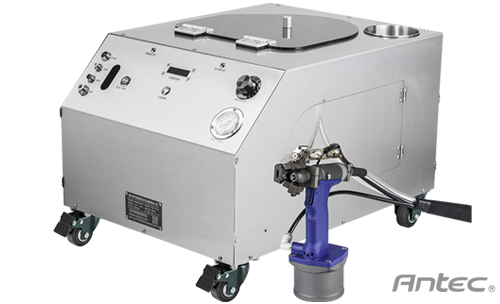
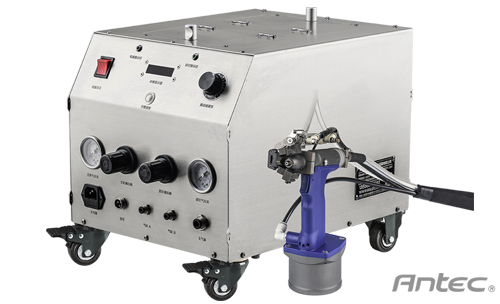
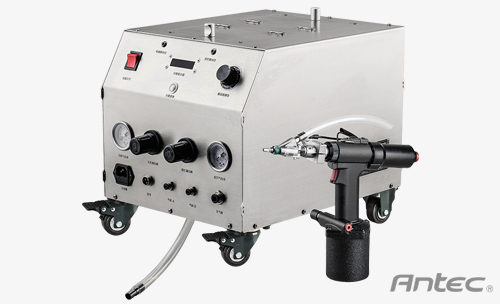
Not every auto-feed blind rivet machine needs to be custom-built. What the industry actually ships is a standard machine plus custom tooling: common rivet sizes and ordinary workstations run on a standard unit that is delivered quickly, and only special rivets, unusual part geometry or production-line integration call for a custom design. Knowing which case you are in saves both cost and lead time.
The pneumatic line is what most plants run day to day - smooth feeding, easy air-line maintenance and parts that are always available. Everything below applies to auto-feed blind rivet machine work in that shop-floor setting.
For sheet metal and enclosure plants, the essentials: how standard and custom machines differ; when a standard machine is enough; when you must go custom; a practical selection process.
1. How standard and custom machines differ
| Item | Standard model | Custom-engineered model |
|---|---|---|
| Rivet sizes | Covers common blind rivet sizes | Special head diameter, length or material, or rivet nuts |
| Delivery | Fast shipment from stock, worldwide | Designed, assembled and tested to your build, then scheduled |
| Pricing basis | One fixed factory-direct price | Itemized quote for design, purchased parts and assembly |
| Tooling | Standard nosepiece included; interchangeable nosepieces cover similar sizes | Custom feed track, fixture, workbench, dual guns or robot |
| Best for | High-mix low-volume work, general sheet metal cabinets | Dedicated product lines, fixed positions, full-line integration |
Parts are held in stock because a stopped line costs more than the part.
2. When a standard machine is enough
Choose a standard machine when your rivets are common industry sizes, the rivet points follow a normal layout, work is mostly handheld or at a fixed station, and volume is moderate or the mix changes often. Standard units ship fast, cost less and are easy to redeploy; replacing manual rivet loading alone typically pays back in 2-6 months on most lines. As volume grows you can add machines or step up to dual guns and robotic stations, so the investment can be staged.
3. When you must go custom
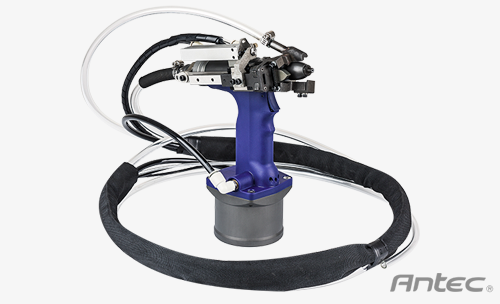
Special rivets: large head diameters, extra-long or extra-short bodies, stainless steel or structural rivets need a custom feed track and higher pull force (common models deliver about 12800N, with stronger versions built to order).
Unusual part geometry: very tight hole spacing, deep cavities, edge positions or irregular workpieces require a custom nose shape and fixture.
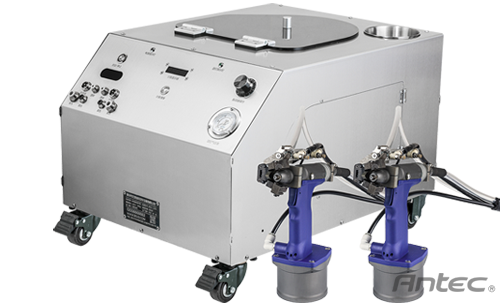
High throughput targets: volume enclosure lines often run a dual-gang, two-gun setup, where both guns work in parallel and output nearly doubles.
Full-line automation: battery trays, automotive parts and other high-volume workpieces at fixed positions run on robotic riveting cells that feed rivets, set them and stay in step with the line.
On the shop floor, the air supply and the nosepiece fit decide whether the rated cycle time holds.
4. A practical selection process
First send the rivet specifications, part drawings and output requirements to the manufacturer for a standard-or-custom assessment. Antec can usually tell within about 10 minutes whether a standard machine is in stock and suitable. If you need a custom build, you get a configuration plan, an itemized quote and a lead time, and we can arrange an on-site trial so measured data confirms the plan before you sign. High-volume sectors such as automotive parts and new energy carry a high share of custom work; see this riveting case for new energy vehicle parts.
5. Standard vs custom by industry
| Industry | Typical demand | Standard or custom |
|---|---|---|
| Automotive parts | Batch riveting of components, rivet nuts | High share of custom work: dual guns, robotic cells |
| Electronics enclosures and cabinets | Many panel variants, cabinet frames | Mostly standard handheld or fixed units; changeover flexibility matters |
| New energy | Battery trays, solar module frames | Robotic riveting cells, higher pull force built to order |
| Sheet metal, power distribution, appliances | Cabinets, housings, brackets | Mostly standard machines with a few custom fixtures |
These are general tendencies; the rivet specification and part geometry still decide. One plant may run both: standard machines on general workstations for flexibility, and dual guns or robotic cells on dedicated high-volume lines. Related industry solutions are grouped by sector on the factory applications page.
The advantage of a standard model is certainty: a mature configuration, units in stock, fast shipment, transparent pricing and a quick start. A custom model fits a dedicated product and raises the ceiling on cycle time and yield. Many customers combine the two, using a standard machine as the base plus custom units on key lines, which caps the first investment while protecting efficiency on the main product, and both types share the same service and spare parts system.
Standard vs Custom: Common Questions
Shop-Floor Questions
Antec covers non-human issues with a 7-day return and a 15-day exchange. Send specifications or a sample for confirmation before you buy, and customers worldwide can request a free on-site trial first.
Yes. The usual path is a handheld pilot, then a fixed station, then dual guns or a robotic cell, invested in stages; the main platform is built to be expanded. The exact scope depends on the model.
Custom work is quoted item by item against the actual workload. Whether it pays off depends on labor saved, yield and capacity, and trial data gives you the numbers for a payback calculation.
The main platform usually leaves room to add a feed track, swap the gun set or add a fixed table, but dual guns and robot integration involve structural and control changes. Tell us your mid- to long-term plan before you buy and the first selection will be much simpler.
Auto-Feed Blind Rivet Machine at a glance: 12,800 N pull force, 50-60 rivets per minute, in stock with fast dispatch, on-site commissioning and parts supply.
Parts are held in stock and commissioning is done on site, so the line starts at the rated 50-60 rivets per minute.
Sheet metal plants: try it on your own panels
Send the rivet size and sheet thickness. We will match the auto-feed machine or the pneumatic gun, then run your panels on site before you decide.
Further reading: Can any rivet size run on an auto-feed blind rivet machine? · How long does it take to build a custom auto-feed blind rivet machine? · Common types of auto-feed blind rivet machine
 Previous