You are here:
Auto-Feed Blind Rivet Machine Ordering Process: 8 Steps
Auto-Feed Blind Rivet Machine Ordering Process: 8 Steps
First-time buyers of an auto-feed blind rivet machine rarely know what to prepare before the first call or how long each stage takes. This guide breaks the Antec standard ordering process into eight steps and spells out what the customer must do at each one, so the project can be scheduled with confidence.
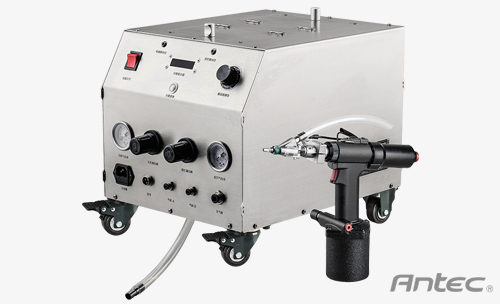
Pneumatic models are the mainstream choice in sheet metal shops: they cover the vast majority of standard riveting jobs and are simple to maintain. Everything below applies to auto-feed blind rivet machine work in that shop-floor setting.
In short, for sheet metal and enclosure plants: the eight-step ordering process; key points at each step; installation, commissioning and training; handling common delivery issues after arrival.
1. The Eight-Step Ordering Process
| Step | What Happens | Customer Action |
|---|---|---|
| 1 Inquiry and specifications | Contact us by phone or web form with rivet and workpiece details | Send rivet specs, drawings and output requirements |
| 2 Proposal and quotation | Proposal and price range in about 10 minutes, plus a standard or custom recommendation | Approve the configuration direction |
| 3 On-site trial | An engineer brings a matched machine to your plant and runs your real workpieces | Prepare rivets, workpieces and cycle-time targets |
| 4 Contract and customization | Model, price, lead time and warranty confirmed, contract signed | Approve the quotation and contract terms |
| 5 Design and production | Custom tooling design, procurement, assembly and in-house trial runs | Send rivet samples promptly |
| 6 Shipping | Standard machines ship fast from stock; custom units ship against agreed milestones | Confirm the delivery address and unloading conditions |
| 7 Installation, commissioning and training | On-site installation, commissioning, and hands-on training in operation and maintenance | Assign operators and maintenance staff |
| 8 After-sales and warranty | 1-year machine warranty, long-term parts supply and global service response | Run routine maintenance against the checklist |
Pneumatic maintenance is simple, but it is not optional - water in the line is the usual culprit.
2. Key Points at Each Step
Inquiry and proposal. Sending everything at once saves the most time: rivet head diameter, body diameter, length and material; workpiece drawings or photos, material thickness and hole count; daily output and cycle-time targets; and the air supply and floor space available on site. With complete information we return a proposal and price range in about 10 minutes, and complex custom projects usually get a preliminary proposal within 1 business day.
On-site trial. For customers worldwide, the factory arranges for an engineer to bring a matched machine to the plant and test continuous feeding, cycle time, pull force and yield on your own rivets and workpieces. A standard on-site trial is free and does not commit you to a purchase.
Production and acceptance. Standard models ship quickly from stock. Custom units are assembled and then run continuously in-house with the customer's rivet samples; you can inspect at the factory or review the sample-run video and measured data, and the machine ships once you sign off. Lead time follows the contract, so raise urgent orders early.
3. Installation, Commissioning and Training
| Scope | What It Covers |
|---|---|
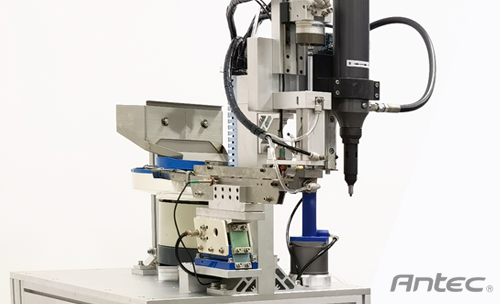
| Set-up on site | Main unit positioned, air and electrical lines connected, feed tube and gun installed |
| Parameter tuning | Feeding, pull force and cycle time dialed in to the rivet spec and confirmed with a continuous sample run |
| Operator training | Power-up, rivet changeover, refilling, counting and handling common alarms |
| Maintenance training | Daily, weekly and monthly inspections, plus wear-part identification and replacement |
Every machine carries a 1-year warranty, with a 7-day return and 15-day exchange policy for non-human-caused problems, and wear parts such as nosepieces are supplied long-term at cost; the factory handles after-sales response worldwide. For custom lead times, see how long it takes to build a custom auto-feed blind rivet machine.
Parts are held in stock because a stopped line costs more than the part.
9. Handling Common Delivery Issues After Arrival
| Issue | How It Is Handled |
|---|---|
| Cosmetic damage or missing parts on arrival | Photograph it on the spot and contact your sales rep; shipping claims and replacement parts are issued per procedure |
| Insufficient air pressure on site | Set up the air compressor as the manual specifies; our engineer checks the air supply parameters at installation |
| Rough feeding after a rivet changeover | Check that the nosepiece and feed track match the new rivet, then clear the track and swap the nosepiece as trained |
| Cycle time short of expectations | Confirm the workpieces match the trial samples; an engineer comes back on site to re-tune and retest |
| Operator turnover | Request refresher training or remote guidance; the machine has a low learning curve and is easy to run |
We recommend naming one machine owner inside your plant to keep the manual, the wear-parts list and the inspection checklist, and to act as the fixed point of contact with the factory. Delivery, training and after-sales all connect more smoothly that way.
Repeat orders are simpler. The rivet specs, configuration and acceptance records for your existing machines are already on file, so an identical unit can go straight to stock confirmation and shipping. When you add a new rivet size or a new product line, you only send the new rivet and workpiece data and we extend the original proposal; the equipment history also keeps maintenance, spare parts and training consistent.
Ordering FAQ
Shop-Floor Questions
Yes, and that is the standard path. Run the on-site trial first and use the measured data to confirm the model and configuration, so you do not buy the wrong machine.
Payment is normally staged at the milestones agreed in the contract. Invoice type, tax and freight are all stated in the quotation and the contract.
Training is only signed off when the operator can run the machine independently. After that we can guide you remotely or return on site; the machine has a low learning curve, so a new operator is productive after a short session.
Yes. New products or new rivet sizes can usually be handled on the existing machine by changing the nosepiece, adding a feed track or fitting a fixture table. Larger changes are re-engineered by our team, and existing customers save on investment by reusing the current main unit.
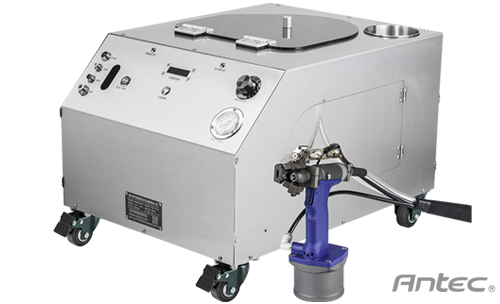
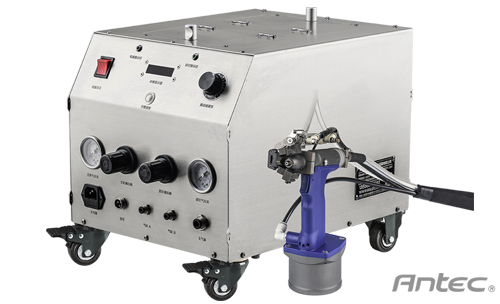
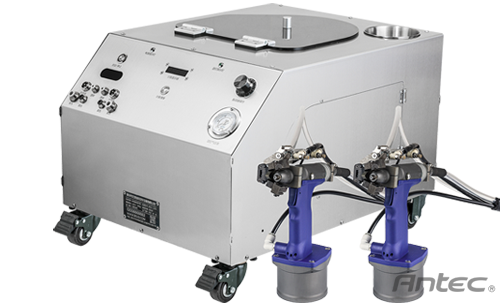
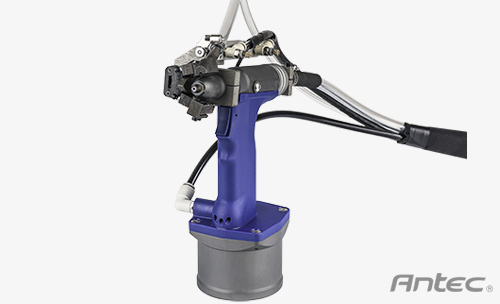
Auto-Feed Blind Rivet Machine at a glance: 12,800 N pull force, 50-60 rivets per minute, in stock with fast dispatch, on-site commissioning and parts supply.
Antec has served more than 800 sheet metal and enclosure plants with free trials, on-site commissioning, parts supply and maintenance.
Sheet metal plants: try it on your own panels
Send the rivet size and sheet thickness. We will match the auto-feed machine or the pneumatic gun, then run your panels on site before you decide.
Further reading: what to prepare for a custom auto-feed blind rivet machine · free on-site trial policy and process · free on-site trial: process and preparation
 Previous