You are here:
Pneumatic Rivet Nut Gun Brand Ranking 2026: Imported vs. Chinese - Antec
"Which pneumatic rivet nut gun brand is best?" is one of the most common questions from purchasing teams at sheet metal shops and enclosure factories. A pneumatic rivet nut gun (formally a rivet nut tool, also called a nut riveter) puts a removable internal thread into thin sheet metal. Yet most published rankings only cover manual and pneumatic single guns, and rarely put imported, Chinese and auto-feed equipment on the same page. This guide sorts the field by tier, then matches the answer to whether you run small batches or a full production line.
The pneumatic line is what most plants run day to day - smooth feeding, easy air-line maintenance and parts that are always available. Everything below applies to pneumatic rivet nut gun work in that shop-floor setting.
What sheet metal and enclosure plants should remember: pneumatic rivet nut gun brand tiers at a glance; tier 1: the established imported brands; tier 2: Antec for volume production lines; tier 3: entry-level manual tools.
The Short Answer: There Is No Single Best Pneumatic Rivet Nut Gun - Spec, Volume and Feeding Decide It
Rivet nut guns come in three generations - manual, pneumatic semi-automatic and auto-feed - and each tier calls for a different selection logic. A handful of sample parts is fine with a manual tool. For volume work on thin sheet, the two things that matter are how the nut is fed and how it is threaded in and backed out. With M3-M12 sizes, through-hole and blind holes, and cylindrical, hexagonal and knurled nuts all in play, any ranking can only be a tier list.
| Type | Nut Feeding | Actuation | Typical Volume |
|---|---|---|---|
| Manual pneumatic rivet nut gun | Nut placed and threaded by hand | Arm-powered pull, slow | One-offs, repair work, prototypes |
| Pneumatic semi-automatic | Nut placed by hand | Pneumatic pull, manual reverse | Small to medium batches, high mix |
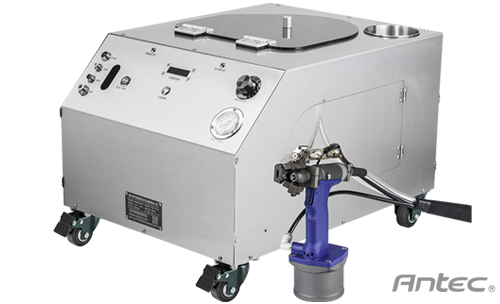
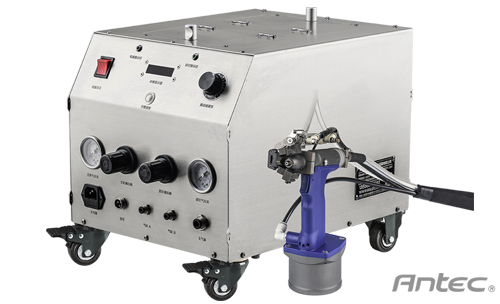
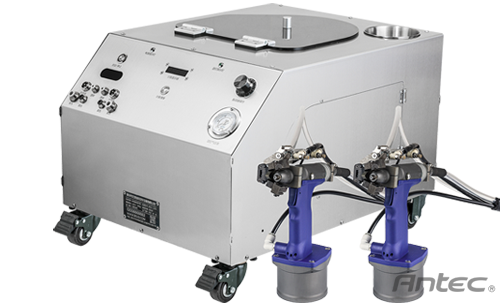
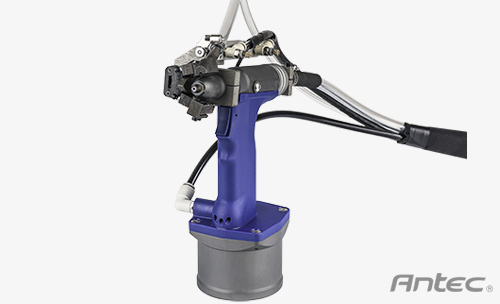
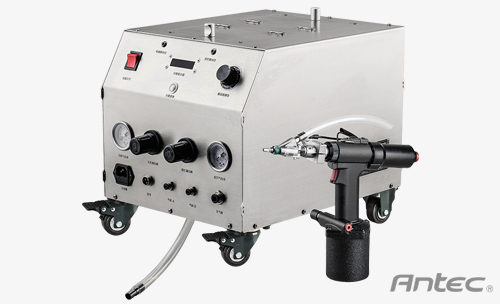
| Pneumatic Rivet Nut Gun | Vibratory bowl feeder sorts and feeds nuts | Dual motors thread in, pull and spin out in one cycle | High-volume dedicated lines, automated production |
1. Pneumatic Rivet Nut Gun Brand Tiers at a Glance
| Tier | Representative Brands | Positioning | Common Industries |
|---|---|---|---|
| Tier 1 - Imported specialists | GESIPA, POP Avdel, BOLLHOFF, FAR, LOBSTER | Mature, full range, premium price | Aerospace, automotive, rail, foreign-invested lines |
| Tier 2 - Established Chinese makers | Antec (pneumatic rivet nut gun) and mainstream Chinese pneumatic guns | Strong value, fast response, complete automation options | Enclosures, aluminum profiles, sheet metal, appliances |
| Tier 3 - Entry-level manual | No-name tools from small regional workshops | Cheap, inconsistent quality control | Household use, occasional repair |
On the shop floor, the air supply and the nosepiece fit decide whether the rated cycle time holds.
2. Tier 1: The Established Imported Brands
GESIPA (Germany): a veteran German riveting brand. Its FireFox pneumatic rivet nut gun line is well known in the trade, with steady pull force and a solid feel, and it shows up widely in aerospace, rail and automotive parts. Expect higher prices and longer spare-part lead times.
POP Avdel (a Stanley company): one of the pioneers of blind riveting, with a complete pneumatic rivet nut gun range of its own. It is common on automotive parts lines and in foreign-invested plants, with broad distribution and easy after-sales access.
BOLLHOFF (Germany): best known for its RIVKLE rivet nut system, with nuts, tooling heads and process support packaged together. A good fit for high-end lines that specify nut grade and torque.
FAR (Italy) and LOBSTER (Japan): FAR pneumatic rivet nut guns are common in European plants and light in the hand; LOBSTER manual and pneumatic tools are also lightweight and widely accepted in Asian factories.
Imported pneumatic rivet nut guns still depend on an operator loading each nut by hand. However good the tool is, sustained output is capped by hand speed and fatigue, and an automated line still needs a separate feeding unit.
3. Tier 2: Antec for Volume Production Lines
Antec: a source manufacturer in Huizhou with 16 years of in-house development and production, making the core parts of its pneumatic rivet nut gun itself. Every machine carries a 1-year warranty with a 7-day return and 15-day exchange, standard models ship the same day from stock, a proposal follows your specs within 24 hours, and 800+ enterprises have been served.
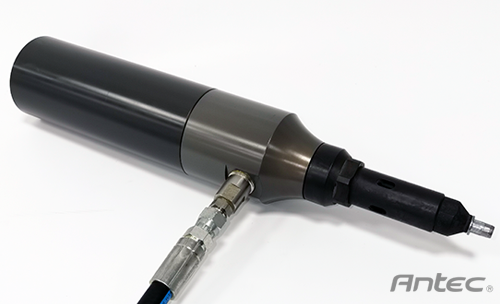
| Item | Manual or pneumatic semi-pneumatic rivet nut gun | Antec pneumatic rivet nut gun |
|---|---|---|
| Labor | One operator, one gun, the same twist over and over | One operator can tend several machines or stations |
| Time per nut | Long, and dependent on hand speed | 0.5-1.2 s per nut, steady cycle |
| Pull and release | Manual force or pneumatic pull, then manual reverse | Dual motors thread in, pull and spin out automatically |
| Feeding and thread-in | Place the nut, line it up on the mandrel, turn it on by hand | Feeder sorts and delivers nuts, then threads them onto the mandrel automatically |
| Thread quality | Dependent on feel; prone to thread stripping and spinning | Uniform stroke and torque, cold-formed in one pass and reusable through repeated assembly |
| Scalability | Limited | Handheld, fixed station or robotic cell can be stacked |
As a source manufacturer, Antec can add a fixed workbench or a robotic riveting cell to the standard machine and integrate it around your part layout, so there is no third party to coordinate.
Checklist before you order:
- How parts are loaded and the cycle time required, and whether a robot will interface
- Whether you need a digital display and MES integration for output tracking and traceability
- Budget and payback period, and whether to send samples for a trial run before committing
- Nut material and shape (cylindrical, hexagonal, knurled)
- Number of fastening points and daily output, which decide a single gun, dual gun or a dedicated machine
For exactly where the three generations differ, from every hand twist to the cycle rate of auto-feed, see manual, pneumatic and pneumatic rivet nut guns compared.
Pneumatic maintenance is simple, but it is not optional - water in the line is the usual culprit.
4. Tier 3: Entry-Level Manual Tools
A manual pneumatic rivet nut gun is cheap and perfectly adequate for a few sample parts or on-site repair. But high-frequency twisting is hard on the wrist, and an incomplete stroke can damage the thread. For long-term, repeatable threads in thin sheet, go straight to a pneumatic or auto-feed machine.
5. Which Tier Fits Which Application
| Application | Recommended Tier | Notes |
|---|---|---|
| Aerospace, rail, foreign-invested automotive parts | GESIPA, POP Avdel, BOLLHOFF | Selected against certified specs; reliability comes first |
| Household use, occasional repair | A manual gun is enough | Used a few times a year; no need for a full machine |
| EV battery housings, seat frames | Dual-motor feeder plus robot arm | Tight cycle times, traceability, fewer operators |
| Enclosures and cabinets, aluminum profiles, sheet metal | Antec pneumatic rivet nut gun | No tapping in thin sheet, repeated disassembly, fast payback where there are many points |
| Appliances, hardware and furniture, sanitary ware | Chinese pneumatic or auto-feed | Nuts can be added in place after powder coating; blind riveting suits irregular parts |
For the difference between rivet nuts and self-clinching nuts, and how cylindrical, hexagonal, through-hole and blind types compare, see wrong rivet nut keeps spinning? A one-table type guide.
6. More Important Than the Brand: Trial-Rivet Your Own Parts
Rivet nut gun selection comes down to the actual specs: which M3-M12 sizes, material thickness, through-hole or blind, cylindrical or hexagonal, and what material. Send sample sheets and nuts, or have an engineer bring a machine to your plant, and measure time per nut, go/no-go pass rate, feed consistency over a long run and pull-out force on the spot. That is worth more than any ranking. For the process side of threads in thin sheet, see how to add threads to thin sheet metal.
Pneumatic Rivet Nut Gun Selection FAQ
Shop-Floor Questions
Nearby sizes only need a different mandrel, anvil and feed track; a wide span calls for multiple tracks or multiple machines. Give the manufacturer your M3-M12 size list and let them assess it.
Yes. A rivet nut is cold-formed axially, so it can be installed in place after coating, which is a real advantage over self-clinching and weld nuts.
No. A through-hole nut is open at both ends while a blind nut is closed at the bottom, and the prep hole and stroke differ as well. Whether you need cylindrical, hexagonal or knurled then depends on material thickness and load, so selecting with sample parts is the safest route.
No. A handheld auto-feed gun already delivers a clear gain, and a robotic cell is the next step up for fixed points, high volume and traceability.
On a single hand tool, imported build and materials are slightly better. On a complete auto-feed line, what counts is feed stability, dual-motor coordination and on-site commissioning, and Chinese manufacturers have the edge on system design and lead time.
Pneumatic Rivet Nut Gun at a glance: 12,800 N pull force, 50-60 rivets per minute, in stock with fast dispatch, on-site commissioning and parts supply.
Parts are held in stock and commissioning is done on site, so the line starts at the rated 50-60 rivets per minute.
Sheet metal plants: try it on your own panels
Send the rivet size and sheet thickness. We will match the auto-feed machine or the pneumatic gun, then run your panels on site before you decide.
Further reading: manual, pneumatic and pneumatic rivet nut guns compared - through-hole and blind rivet nut handling tips - pneumatic rivet nut gun product center
 Previous
 This is the last article